


Interview with Dr. Niwa
from Department of Clinical Application, Center
for iPS Cell Research and Application, Kyoto University
Interview with key opinion leaders
Behind the Scenes of Developing the 5 mL Tube Compatible Mesh Seal
Aiming to Connect Research to Treatment
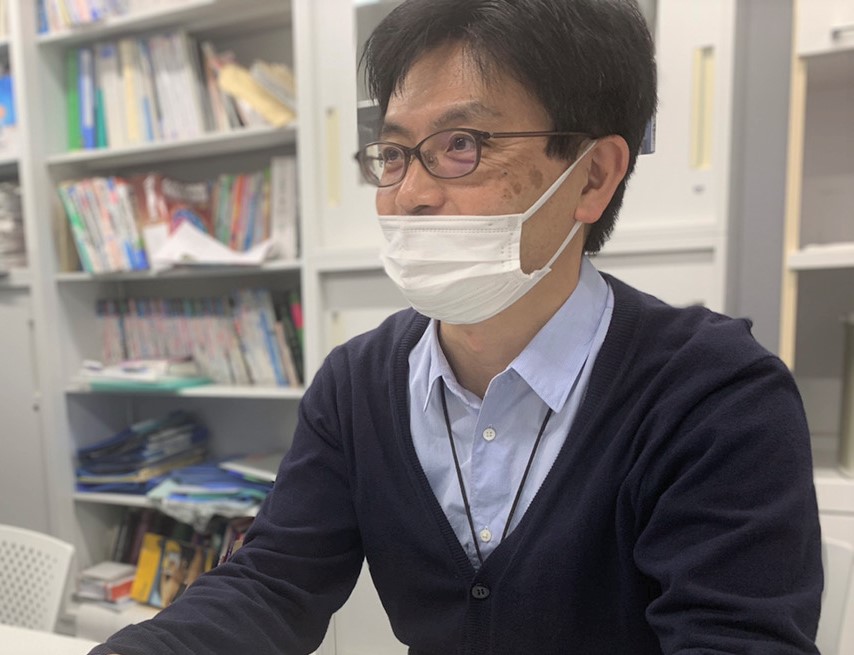
Dr.Niwa:
Our laboratory aims to uncover the causes and mechanisms of diseases such as autoimmune diseases, autoinflammatory diseases, and leukemia, ultimately leading to new treatments. Currently, we are working on analyzing hematological diseases by using iPS cells.
To analyze blood disorders, we need to generate blood cells from iPS cells. This is an essential process for investigating how diseases develop and for elucidating their underlying mechanisms. By differentiating iPS cells – originally derived from patient samples – into blood cells and comparing their reactions and characteristics, we search for clues to the causes of these diseases.
The diseases we study include CINCA syndrome, reticular dysgenesis, and Nakajo-Nishimura syndrome. As these diseases are extremely rare, conducting research on them had been difficult for in the past. However, by reprogramming cells from patients with rare diseases into iPS cells, such research has now become possible.
I originally worked as a pediatrician. While I see children and their families suffering from rare diseases with so few treatment options, I wondered what more I could do for them. That led me to pursue research in this laboratory.
Achieving the Best Performance with Limited Budget
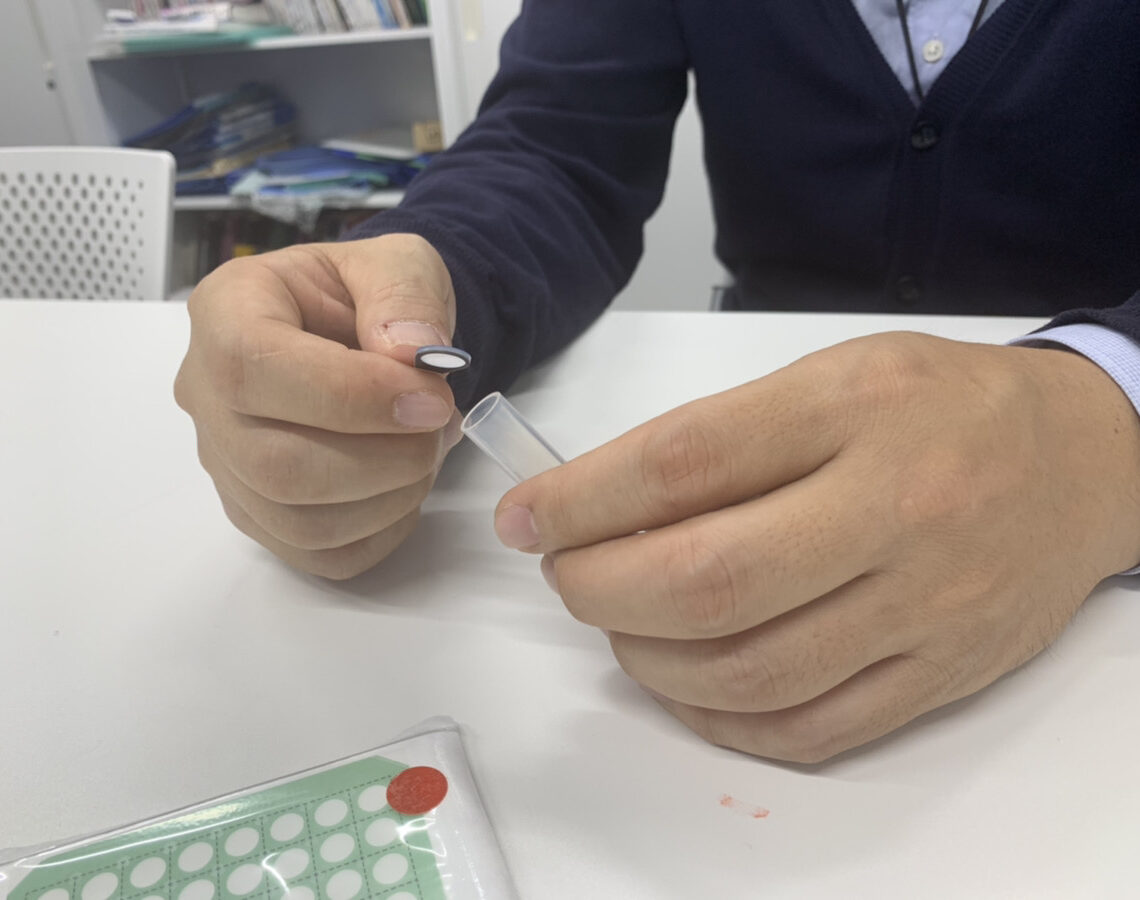
Dr.Niwa:
Cell strainers are essential tools in our experiments. Since research budgets are limited, we eager to keep costs as low as possible. We had wondered if there might be a product without compromising the performance of our current cell strainers, while being more convenient and cost-effective. One time, another researcher introduced us to CSCRIE. If CSCRIE had not reached out to that researcher, I would not have met CSCRIE, nor would the 5 mL tube compatible mesh seals have been developed.
CSCRIE: The Flexible and Responsive Partner
Dr.Niwa:
When we requested samples and saw the prototype for the first time, I thought, “Can they really make something this item at this price?” When we actually used the mesh seals in our research, we found them incredibly easy to apply and remove from tubes. That convenience truly surprised us. With our previous cell strainers, removing the caps from tube was a bit troublesome. Using one or two was not a problem, but our analyses require many strainers, and it was time-consuming. CSCRIE’s mesh seals adhere securely yet peel off easily – simple to describe, but revolutionary in practice.
The thickness of this mesh seal is also just right. Initially, the seals were slightly thinner, but when we asked if they could make them a bit thicker, CSCRIE responded immediately. We were very grateful for their flexibility and for listening closely to user needs. Finding this kind of partner is not easy.
CSCRIE:
We believe that many researchers had been tolerating inconvenient products simply because better options were unavailable. By directly talking with researchers, we hope to continue improving existing products and developing new ideas every day.
Dr. Niwa:
Not only this mesh seal, but I hope CSCRIE will continue identifying areas where researchers feel even small inconveniences and turn those insights into new products. Choosing low-cost items to save on research expenses can sometimes hinder progress. CSCRIE’s products are reasonably priced yet high-performing, which is extremely helpful for us with limited budgets. And because the products are manufactured in Japan, they arrive quickly when we need them for experiments. This is a huge benefit.
CSCRIE:
Knowing that our products may indirectly contribute to helping patients is truly rewarding. We will continue listening to researchers and strive to deliver new products to our customers as quickly as possible.
About the interlocutor and the introduced product
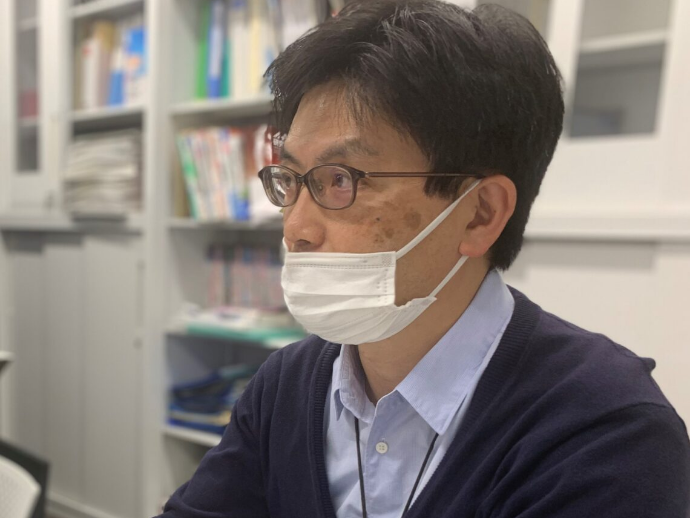
Dr. Akira Niwa
Department of Clinical Application, Center
for iPS Cell Research and Application, Kyoto University
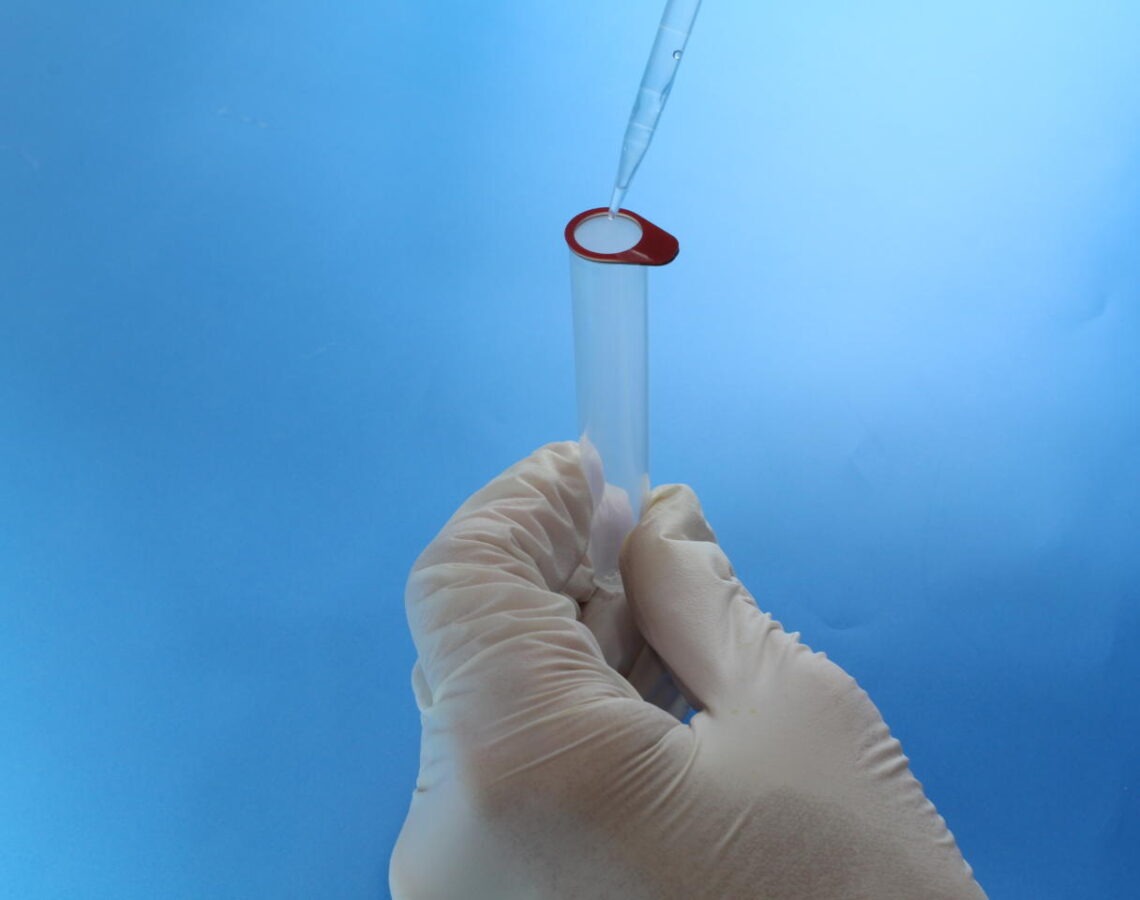
Introduced Product: Mesh seal for 5 mL tube
Feature: CSCRIE’s mesh seal for 5 mL tube is a strip type cell strainer, which provides rapid and easy filtration to dissociate clumping cells and remove debris. This unique strip is useful for filtration of small volume samples as it works not only for 5 mL tubes but also for 1.5 mL centrifuge tubes.